


Find us on Social Media
Volume 18 No. 12
What glorious GBay weather we are enjoying which allows for good sailing, boater coaching classes, kayaking and much more!
Do you know what Slow Ride is? Are you aware of the pitfalls for some night navigation lights? As the summer gets into high gear, it is good to be mindful of safe boating practices…so read below to be informed/reminded of what’s really important in order to be safe as we enjoy our summer!

Table of Contents In this eBlast:
PaBIA
- You Be The Judge – Septic Screening Program
- Slow Ride is Back
- PaBIA’s Sailing Race – Mike Mosley Memorial Cup
- On the Water Boater Coaching:
- Wednesdays, July 8 & 15
- Meet the Pike Who Went Fishing for Dinner
- Meet the Watershed – Friday, July 17
- Why Brighter Isn’t Better –
- Rethinking Navigational Lights
- Yearbook Update
OF INTEREST
- ToA Recycling – Want to know what to put where?
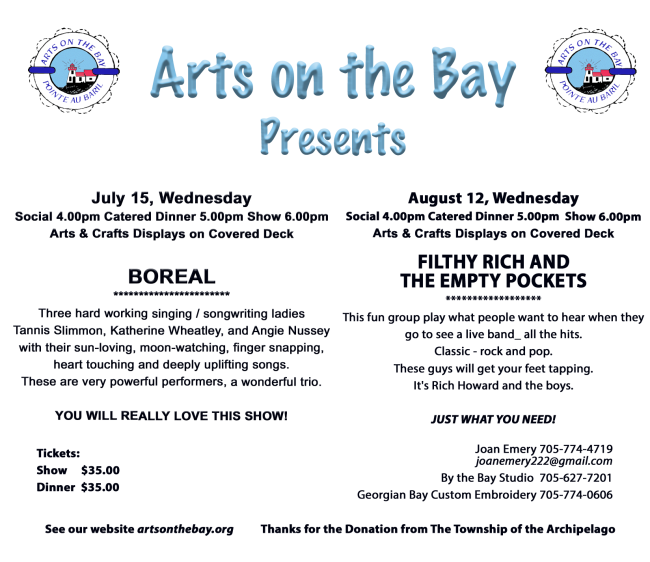
- Arts on the Bay – July 15
- GBB – Off to a GREAT Start to Summer 2026
- Lake Michigan-Huron Water Levels – July 1, 2026
PaBIA
Whenever Possible please sign up for events (Optional)
to make planning the food and beverage easier.
PaBIA Boater Coaching for July 8 and July 15. Sign Up Here with the Ojibway Office
PaBIA Presents Naturalist: Living with Bears in Cottage Country Sign Up Here for July 15
GBLT Ecologist Talk Corridor Project for July 10. Sign Up Here
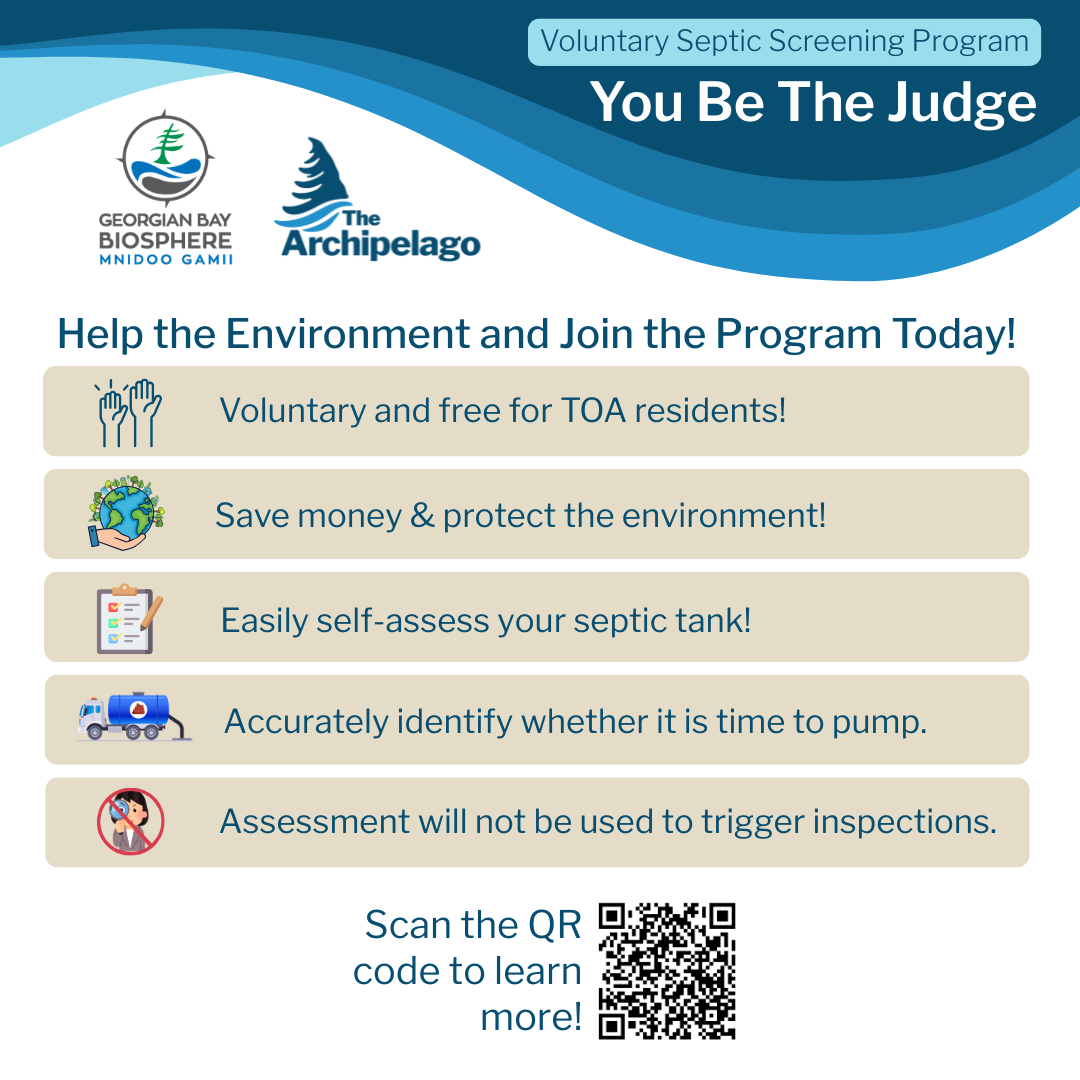
You Be The Judge
Septic Screening Program
The Georgian Bay Biosphere and Township of The Archipelago staff and Council are piloting a new voluntary septic monitoring program. The You Be the Judge program involves self-assessing the status of septic tanks using a sludge sampler.
Sludge samplers are easy-to-use tools for determining when a septic tank is in need of pumping and conversely, when pumping is not yet required. Measuring the sludge in a septic tank can result in cost savings for a property owner and an environmental benefit from pumping and hauling waste only when it is necessary. If interested, please register here.
What is SLOW RIDE?
Why We’re Bringing It Back
SLOW RIDE began about 30 years ago after our community experienced a tragic nighttime boating accident. In the days that followed, a group of grieving Ojibway staff came together to create something positive in the hope of making us all safer. Their idea was simple: after dark, everyone would cruise home slowly—off plane, lights on—taking the time to enjoy the stars, the laughter of friends, or the quiet beauty of the bay.
It caught on.
People wore the hats. We talked about it on the docks. As the night came to an end, we reminded each other to SLOW RIDE before climbing into our boats and heading home. It wasn’t a rule or a policy, it was simply a reminder to take care of one another. Before long, SLOW RIDE had become part of summer in Pointe au Baril.
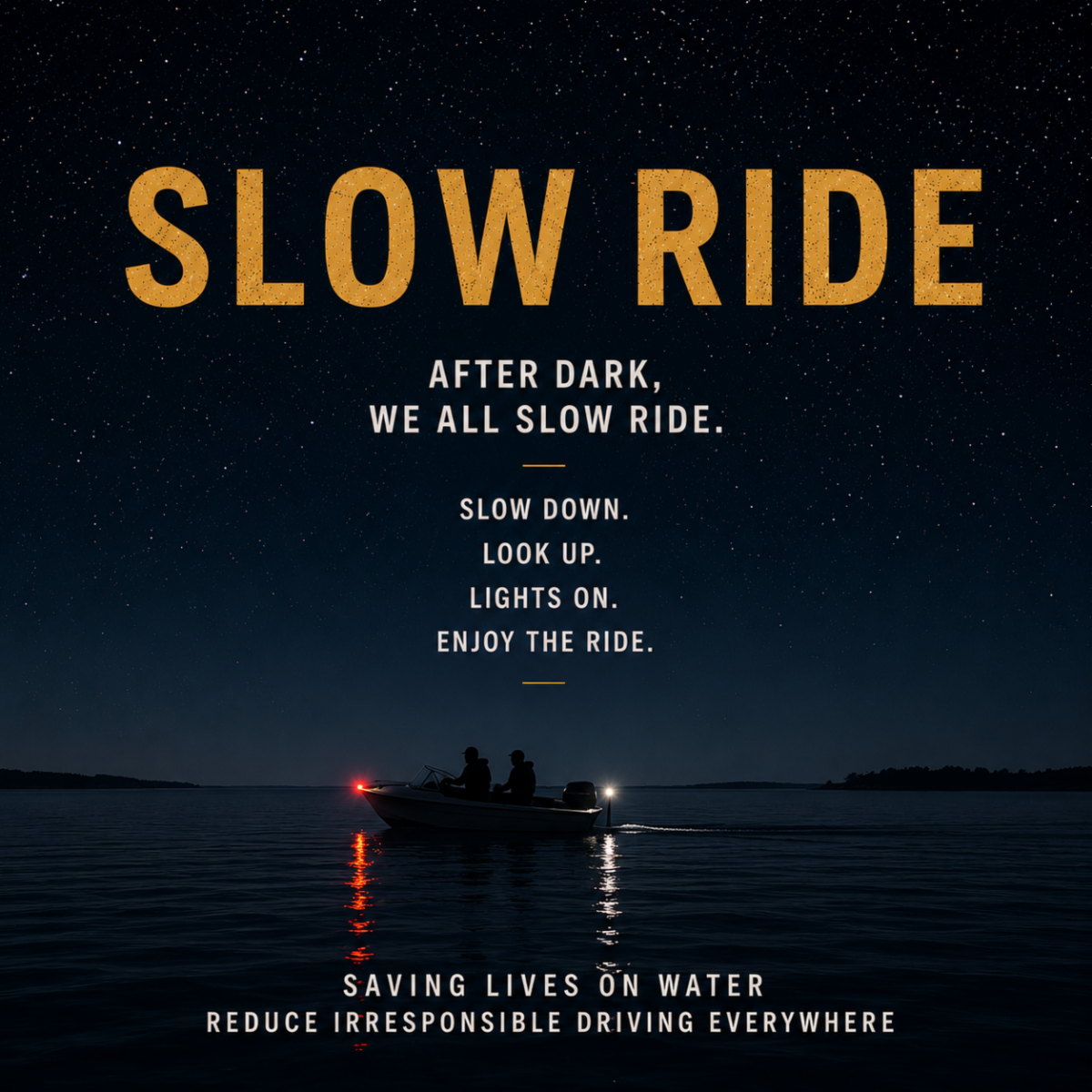
A lot has changed since then, but the reasons behind SLOW RIDE haven’t. If anything, they are even more relevant. Boats are faster, there’s more traffic on the water, and many people have never experienced SLOW RIDE or heard the story behind the movement. This summer, we invite everyone in our community to make SLOW RIDE part of the ride home again.
After dark, we all SLOW RIDE.
Slow Down. Look Up. Lights On. Enjoy the Ride.
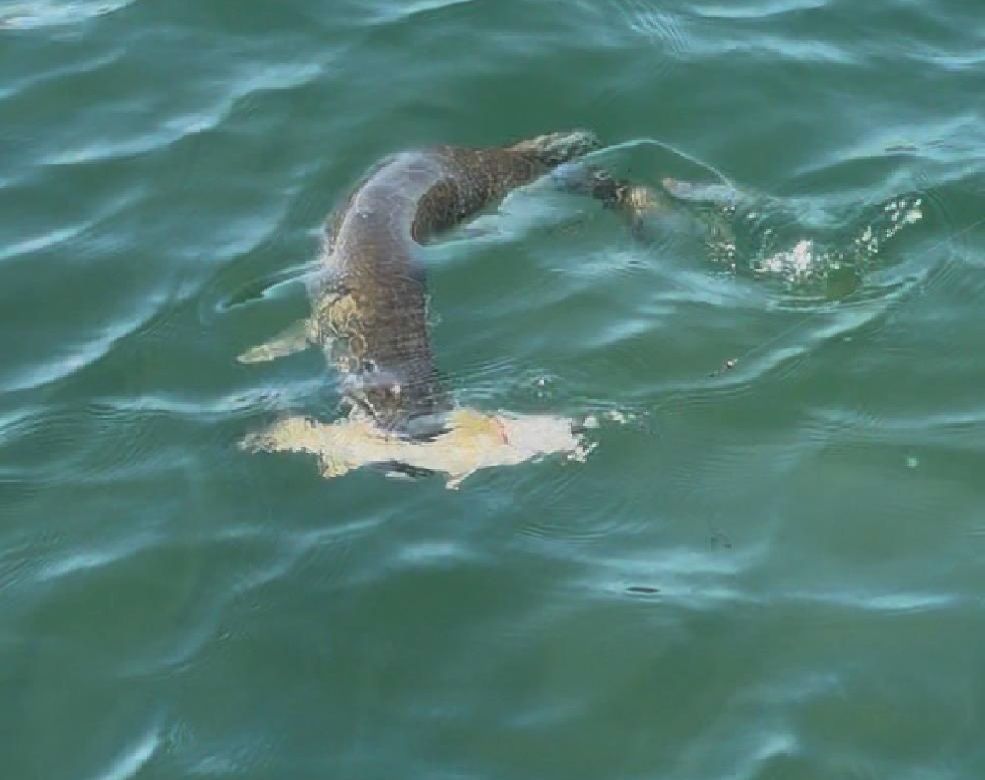
Meet the Pike who was Fishing for Dinner
by Steve Woodhead
On opening day of the new fishing season, fishermen were out trying their luck with their new lures. However they weren’t the only ones out looking for dinner, as noted here in the picture with the large pike that took hold of a 12” bass while the bass was being reeled in by the satisfied fisherman.
The pike ultimately let go after a minute, and the bass was released, shaken but unharmed.
Meet the Watershed – Exploring the Giant Floor Map!
Ojibway Front Docks
Friday, July 17 @ 4 – 6 pm
Explore, hear the stories and learn about Anishinaabek place names.
Join PaBIA and GBB to explore a giant floor map of the Great Lakes Watershed known as “Binaagami”, hear stories and learn Anishinaabek place names! Please RSVP to help the Club plan on the food and drink – to make sure there is plenty for everyone!
2nd PaBIA’s Sailing Race of the Season
Mike Mosley Memorial Cup
We will be racing out in the Open next Saturday, weather permitting.
Course:
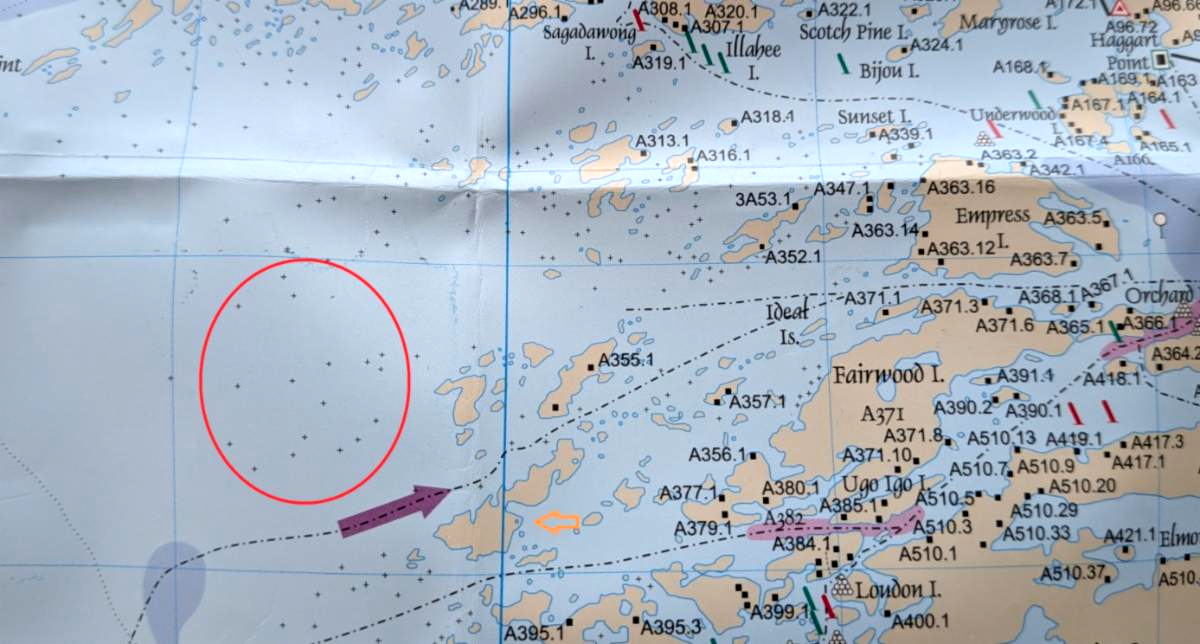
Open – West of Empress (see map); Weather alternative, Ojibway Bay.
Time: 2:00 pm
Rendezvous:
Mosley Island (Bob Mosley and Jane Stevens, A377.1)
Two races:
Windward-leeward course (offset and leeward gate as described below)
The general course area is circled in red. There is an orange arrow at a good anchoring location. This whole area is pretty shoaly. We will set the course far enough off shore that there is plenty of water, but be alert to what’s under your boat.
This weekend is the Mike Mosley Memorial Cup, our time to appreciate the enormous commitment and contribution Mike made to our sailing community. Plaques for first place in each of the Albacore, Scot, and Laser classes. We will also be awarding the Totem Island trophy to the best performing Melges 15.
Why Brighter Isn’t Better:
Rethinking Lights on the Water at Night
…courtesy of Mikko Henry, San Souci Cottage Association
With more boats now equipped with high-intensity LED lighting—sometimes as bright as automotive headlights—there is growing concern about how these lights affect safety on the water. While they may seem helpful, overly bright forward-facing lights can actually reduce visibility, both for you and for other boaters.
Under Transport Canada regulations and the Collision Regulations (which adopt the International Regulations for Preventing Collisions at Sea), vessels are required to display only specific navigation lights when operating at night. Depending on the vessel, these include red and green sidelights and a white stern or all-round light. The regulations also state that additional lighting must not impair the visibility or distinctive character of these required navigation lights or interfere with maintaining a proper lookout.
Navigation lights are more than just equipment requirements—they are a language. They tell other boaters your direction of travel, your position, and who has the right of way. Safe navigation depends on everyone being able to see and correctly interpret these signals.
Very bright LED light bars or forward-facing “headlights” can create significant glare, particularly when reflected off the water. This glare can temporarily blind oncoming operators, make it difficult to judge distance and direction, and reduce overall night vision. Unlike driving on a road, boating relies on low-light navigation and clear, consistent signals between vessels.
There is also a courtesy aspect to consider. On smaller bays and in narrow channels, bright lights can shine directly into nearby cottages, across docks, or into the line of sight of other boaters trying to navigate safely. What feels like added visibility for one operator can quickly become a nuisance—or even a hazard—for everyone else.
Improper lighting can also have legal consequences beyond a ticket. Under Canadian maritime law, vessel operators have a duty to navigate safely and maintain a proper lookout. If an accident occurs and overly bright or improper lighting is found to have contributed—by blinding another operator, obscuring navigation lights, or preventing another boater from determining who had the right of way—it may be considered a contributing factor in the investigation and could affect liability for damages or injuries.
In short, if your lights interfere with another person’s ability to navigate safely, they may also affect how fault is determined after an incident.
For safe and courteous boating after dark, members are encouraged to:
- Use only approved navigation lights while underway.
- Avoid shining bright lights directly toward other boats or shorelines.
- Use spotlights sparingly and never continuously while moving.
- Ensure your navigation lights are properly installed and clearly visible.
Transport Canada emphasizes that navigation lights are designed to help others understand your vessel’s position and movement—not to illuminate the water ahead. Keeping lighting simple, compliant, and considerate helps everyone stay safe and enjoy peaceful evenings on the water.
Of Interest
An Incredible Start to the Summer!
Wow, the Biosphere team was busy across the region during the month of June! Conservation and community highlights include:
- Building 10 ft community garden fencing & managing 75 garden plots
- Distributing 100 turtle nest protectors
- Replacing thunderboxes on the outer islands of Georgian Bay
- Collecting 2,500 turtle eggs
- Hosting events, like our first Repair Cafe of the year!
CHECK OUT THE BIOSPHERE UPDATE HERE
Recycling in 2026-Saving the Landfill
Ever wonder what recycling goes into the container bin and what goes into the paper/fibre one? On the ToA website, they have made it easier to better ID what goes where by charting the items that get thrown out in which bin. The number of items that can go into recycling (and therefore not into the landfill) has increased. It’s important to sort properly so the bags don’t end up in the landfill.
Yearbook Update
With each eBlast, we provide with a list of members with updated contact information.
The details of all the changes since the March 15 deadline for the 2026 yearbook are provided in THIS printable format
for you to insert into your Yearbook! This is the full list until after the new Yearbook is published
For reporting Markers’ problems
contact Tom Cavers by cell (pg. 266 in Yearbook 2026) or email
To contact Secretary-Treasurer
Elise Findlay: contact.pabia@gmail.com
- Astor, Marcia & de Savary, Lisa (change)
- Dalglish, Geordie & Bell, Swith (addition)
- Doyne, Luke (addition)
- Doyne, Martha (addition)
- Moore, Jack (addition)
- Moore, Tim & de Savary, Nicola (addition)
Water Levels
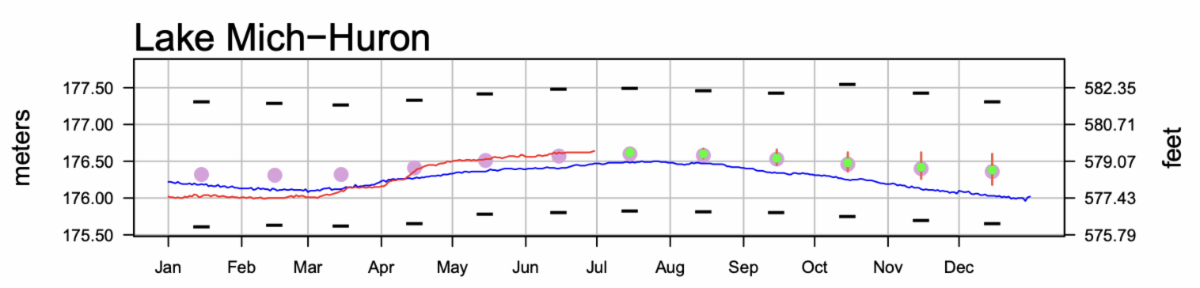
Lakes Michigan/Huron Water Levels July 1, 2026.
To better read the charts, please click on the chart for the Daily or Six Month Forecast Water level chart and the corresponding websites

Please support PaBIA’s Yearbook Advertisers 2026
This site’s advertising feature was created to provide assistance for special local information & events for existing Yearbook advertisers only.
Emergency
• PaB Nursing Station
• Canadian Coast Guard
Search and Rescue
800-267-7270
• PaBIA Emergency info