
• Contact Us
  • Join PaBIA
0 Items
PaBIA
  • Home
  • Membership
  • Administration
    • Directors/Teams
    • By-Laws
    • Minutes
    • Survey
  • Communication
    • Announcements
    • eNewsletters & eBlasts
    • Bulletin Board
    • Webcam
    • PaBIA Pictures
    • Policy on Communications
  • Ratepayers
    • Ratepayers Page
  • Education
    • Education Page
    • Literally, on the Bay
  • Environment
    • All
    • Nature
    • Fish & Fish Biology
      • Fishing a Sport for Life
      • Fishing Resources
      • Eblast Articles
    • Forest and Wildlife
    • Plastic Polution
    • Invasive Species
      • Asian Carp
      • Gypsy Moth
      • Phragmites
      • Pine Sawfly
    • Water
      • Blue Green Algae
      • Water Levels
    • Land Use
    • Other
  • Calendar
    • June
    • July
    • August
  • Activities
    • Events
    • Sailing
    • Senior Regatta
    • Junior Regatta
  • Safety
    • Boating Safety
    • Markers
    • Maps
    • Medical Emergency
    • Fire Emergency
    • WhatsApp
    • What3Words
    • Weather Radar
  • Indigenous Affairs
    • Land Acknowledgment
    • Articles
    • SFN Website
  • Links
    • GBA
    • GBF
    • GBLT
      • Fairwood Preserve
    • GBB
    • The Ojibway Club
    • OHPS
    • Township of The Archipelago
    • West Parry Sound Health Centre
    • Habitat for Humanity
  • Advertisers
    • Our Advertisers
    • 2026 Advertising Rates
Select Page

Dock Spiders

Jul 21, 2022 | Environment, Nature

by Trudy Irvine, Education Committee

Did you know dock spiders don’t make classic spider webs? That they can walk on water and scuba dive for prey for up to 30 minutes? That while they eat mostly aquatic insects, they can tackle minnows, tadpoles, and frogs up to 5 times their size?
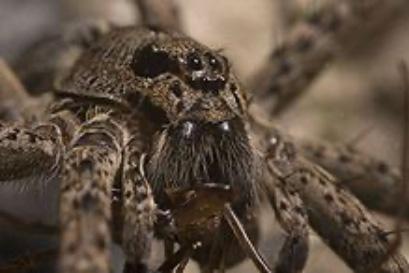
Like other arachnids, dock spiders (also known as fishing spiders) hunt by detecting vibrations created by their prey. But instead of webs, water is their hunting ground. With their back legs holding onto the shore, they stretch their body and other legs out on the surface of the water.  Special organs in those legs and feet help them discern the direction, the distance, and the likely source of disturbances. Their legs and bodies are covered in fine, hydrophobic hairs, which allow them to float and run on the surface tension of the water like water striders. Quick on their feet, some dock spiders use a silk dragline to prevent them from speeding past their prey. 

Air trapped in their hairy bodies also allows them to dive beneath the surface and remain submerged, covered in what looks like a fine, silvery envelope.

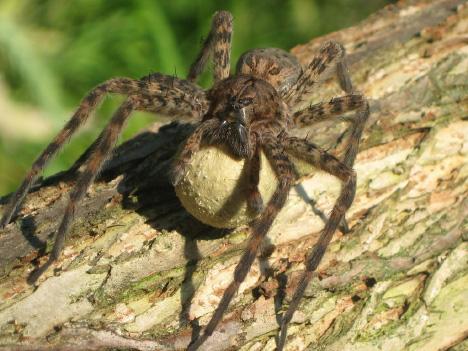
The breeding behavior of dock spiders is also interesting. After mating, the male remains attached to the female but will die shortly after, without any interference from her. The female then eats the male to ensure nutrition for rearing her young. Her brood consists of up to 1000 baby spiders in an egg sac, which she carries in her fangs like a cotton ball. When they are close to hatching, she will spin a small, dense web under a dock or in grasses to shelter her spiderlings, and she will stay close by as they develop, earning this species another name of “nursery web spider”.

Do not fear the bite of a dock spider – they are not aggressive and will withdraw when they feel threatened. Bites may occur if they are inadvertently stepped on or handled. Make sure you shake out those clothes you left lying on the dock before you put them back on!
\

Recent Posts

  • PaBIA eBlast May 13, 2026
  • PaBIA eBlast April 22, 2026
  • PaBIA eBlast April 1, 2026
  • PaBIA’s eBlast March 4, 2026
  • PaBIA’s eBlast January 28, 2026

Categories

  • Announcements
  • Asian Carp
  • Birds
  • Blue Green Algae
  • Boating Safety
  • Books
  • Community
  • Doctrine of Discovery
  • Eblasts
  • EMS
  • Environment
  • Fire Emergency
  • Fish & Fish Biology
  • Forest & Wildlife
  • Gypsy Moth
  • Invasive Species
  • Land Use
  • Mammals
  • Markers
  • Medical Emergency
  • Minutes
  • Naturalist
  • Nature
  • Phragmites
  • Pine Sawfly
  • Plastic Polution
  • Ratepayers
  • Safety
  • Shawanaga First Nations
  • Uncategorized
  • Water
  • Water levels

Archive Topics

  • May 2026
  • April 2026
  • March 2026
  • January 2026
  • December 2025
  • August 2025
  • July 2025
  • June 2025
  • May 2025
  • April 2025
  • August 2024
  • July 2024
  • June 2024
  • May 2024
  • April 2024
  • March 2024
  • February 2024
  • January 2024
  • August 2023
  • July 2023
  • June 2023
  • May 2023
  • March 2023
  • February 2023
  • January 2023
  • December 2022
  • November 2022
  • October 2022
  • September 2022
  • August 2022
  • July 2022
  • June 2022
  • May 2022
  • April 2022
  • March 2022
  • February 2022
  • January 2022
  • December 2021
  • October 2021
  • September 2021
  • August 2021
  • July 2021
  • June 2021
  • May 2021
  • April 2021
  • March 2021
  • February 2021
  • December 2020
  • September 2020
  • August 2020
  • July 2020
  • June 2020
  • May 2020
  • April 2020
  • January 2020
  • October 2019
  • August 2019
  • July 2019
  • June 2019
  • May 2019
  • April 2019
  • February 2019
  • January 2019
  • December 2018
  • November 2018
  • October 2018
  • September 2018
  • August 2018
  • July 2018
  • June 2018
  • May 2018
  • April 2018
  • February 2018
  • January 2018
  • November 2017
  • September 2017
  • August 2017
  • July 2017
  • June 2017
  • April 2017
  • March 2017
  • December 2016
  • November 2016
  • August 2016
  • July 2016
  • June 2016
  • May 2016
  • March 2016
  • February 2016
  • January 2016
  • December 2015
  • October 2015
  • September 2015
  • August 2015
  • July 2015
  • June 2015
  • May 2015
  • April 2015
  • February 2015
  • January 2015
  • July 2014
  • April 2014
  • March 2014
  • January 2014
  • November 2013
  • April 2013
  • Sign In
  • My Account
  • Logout
  • Facebook
  • RSS

Designed by Elegant Themes | Powered by WordPress